Pre-employment checks are a necessary part of hiring in regulated environments. They protect organisations, support compliance obligations, and help ensure the right people are joining the business.
But for candidates, they can often feel like the point where excitement turns into frustration.
Long forms. Repetitive data entry. More requests for documents that have already been shared. Little visibility on what’s happening or how long it will take. In some cases, checks become the slowest, most stressful part of the hiring process – and the first real experience a candidate has of how an organisation operates.
Even the most patient candidate can become frustrated, and accept alternative offers of employment elsewhere.
A candidate-first approach to compliance challenges not just the idea that pre-employment checks have to be slow, clunky, or intrusive to be done correctly. Instead, it asks a simple question: can we meet regulatory requirements while also delivering a better experience for both candidates and HR staff?
With modern, digital approaches, the answer is entirely yes.
Why manual processes increase drop-off rates
A lot of candidates understand why checks are needed. Identity verification, right to work, background screening, and regulatory checks all make sense in context. But what many of them struggle to understand – and rightly so – is why they can be so slow and repetitive to carry out.
Traditional, pre-digital pre-employment processes often rely on:
- Paper forms or static PDFs.
- Manual document uploads.
- In-person or video ID checks.
- Back-and-forth emails to resolve missing information.
- Long periods of silence while checks are completed.
Even when teams are doing their best, these approaches can feel disjointed and opaque from a candidate’s perspective. Candidates might be asked to provide the same bit of information in more than one of these steps – their address or ID, for example. They might email you what they think is the right bit of information on a Friday afternoon, and then not get told until Monday morning that they didn’t complete something correctly – wasting days in the process.
The hidden cost of outdated pre-employment checks
When pre-employment checks feel difficult for candidates, the impact goes far beyond inconvenience.
From a hiring perspective, traditional processes can lead to:
- Delayed start dates.
- Increased candidate drop-off.
- Higher administrative burden for recruitment teams.
- Poor first impressions of your employer brand.
From a candidate’s point of view, the experience can feel overly complex, repetitive, intrusive, and poorly communicated. All of these frustrations, coupled with potential delays, can cause a new hire to question whether joining your organisation is the right decision – and could even cause them to accept another offer while they’re waiting for your next email.
In competitive hiring markets, even small delays or frustrations can be enough for candidates to disengage, particularly when they’re juggling multiple offers.
A smoother compliance journey doesn’t just protect your organisation from compliance fines and reputational damage. It protects your ability to secure the talent you’ve worked hard to attract.
What does “candidate-first compliance” actually mean?
Candidate-first compliance doesn’t mean lowering standards or skipping checks. It means designing compliance processes around the people going through them – including HR staff.
In practice, that means:
- Clear, simple instructions at every step.
- Minimal repetition of information.
- Transparency around what’s being checked and why.
- Secure handling of personal data.
- Progress that supports momentum rather than stalling it.
At its core, candidate-first compliance recognises that compliance is part of the onboarding journey, and not a separate hurdle candidates have to jump before they’re allowed to start.
Streamlined processes for candidates also results in a quicker, easier process for HR staff. Switching to digital systems rather than paper-based processes means less admin, fewer emails and phone calls, and no repeated data entry – as well as being far more secure.
Why digital pre-employment checks are safer
One of the biggest misconceptions around digital compliance is that moving checks online introduces additional security risk. In reality, the opposite is often true.
Traditional processes frequently involve:
- Sensitive documents being shared via email, or left unguarded on desks.
- Files stored locally or shared across multiple systems.
- Manual handling by multiple people.
- Limited visibility or auditability.
- Less control over unauthorised access.
Digital pre-employment checks reduce these risks by design.
Secure platforms like Amiqus use encrypted data capture, controlled access, and clear audit trails to ensure information is handled safely throughout the process. This significantly reduces the risk of documents being lost, intercepted, or accessed by unauthorised individuals.
Less manual handling also means fewer opportunities for human error, something regulators increasingly expect organisations to address.
Faster checks don’t mean cutting corners
It’s understandable to think cutting time would cut corners – but with the right system, you actually make meaningful improvements to your processes.
Automation and smart workflows help by:
- Removing unnecessary manual steps.
- Reducing back-and-forth communication.
- Flagging issues early rather than late.
- Giving teams real-time visibility of progress.
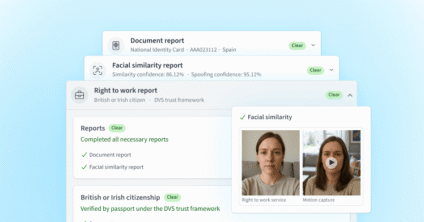
Candidates can complete checks in their own time, on their own devices, without you (or them) needing to book appointments or chase paperwork. You can send a candidate a request for their whole suite of checks on a Monday evening, and have their results in less than 10 minutes, ready for when you’re back in the office the next day,
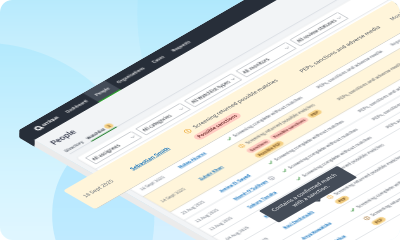
Recruitment and HR teams can see exactly where someone is in the process, without relying on inboxes or spreadsheets – resulting in faster progress without sacrificing oversight or defensibility.
The candidate experience advantage
This is where candidate-first compliance really matters.
For candidates, digital pre-employment checks feel fundamentally different to traditional processes. Instead of being asked to gather documents, print forms, or attend checks during working hours, they experience a guided, intuitive journey that takes minutes, not days.
A strong candidate-first experience typically includes:
- Mobile-friendly, accessible interfaces.
- Clear explanations of what’s required.
- Fewer uploads and repeated questions.
- Visibility into progress and next steps.
This matters because pre-employment checks are often the first operational interaction a candidate has with your organisation. The experience sets expectations about how things work internally.
A smooth, respectful compliance journey signals professionalism and an organised workplace, and above all, respect for candidates’ time and data. Those signals carry through long after day one.
Better compliance is better for employers
Candidate-first compliance isn’t just about being nice to candidates. It delivers tangible benefits for hiring teams and organisations.
Employers typically see:
- Higher completion rates
- Fewer incomplete or abandoned checks
- Reduced admin for recruitment and HR teams
- More consistent, higher-quality data
- Clearer audit trails and reporting
By centralising checks in one secure system, teams spend less time chasing information and more time focusing on decision-making.
Candidate-first approaches often reduce internal friction just as much as external friction.
Compliance as part of onboarding, not an obstacle
When compliance is treated as a standalone task, it inevitably feels like a blocker. When it’s embedded into onboarding, it becomes a streamlined part of the candidate onboarding journey.
A candidate-first compliance process reframes pre-employment checks as:
- A trust-building exercise.
- A demonstration of organisational standards.
- A natural step between offer and start date.
This shift is increasingly important as regulatory expectations evolve. Supervisors are looking not just at whether checks were completed, but how they were conducted and evidenced.
Clear processes, consistent data, and strong audit trails support both compliance and candidate experience – and don’t force organisations to choose between the two.
How Amiqus supports candidate-first compliance
Amiqus is designed to help organisations deliver secure, efficient, and candidate-friendly pre-employment checks within a single platform.
By digitising identity verification, background checks, pre-employment checks, and more, Amiqus removes unnecessary complexity from the process while maintaining rigorous standards. Candidates benefit from a smoother, clearer experience, while teams gain visibility, consistency, and confidence.
Importantly, Amiqus supports compliance as part of the wider onboarding journey – and not a disconnected task – helping organisations move faster without compromising on security or governance.
Looking ahead
Candidate expectations are changing, as are regulatory expectations.
Organisations that continue relying on fragmented, manual pre-employment processes risk falling behind; not just in compliance, but in their ability to attract and retain talent.
Candidate-first compliance offers a practical, achievable way forward. By combining secure digital checks with thoughtful process design, organisations can meet their obligations while delivering a better experience for everyone involved.
Ready to streamline your pre-employment checks?
If you’re reviewing your current compliance processes, or want to explore how digital, candidate-first pre-employment checks could work for your organisation, we’d love to help.
Book a call with the Amiqus team to see how we can support safer, faster, and more human compliance.