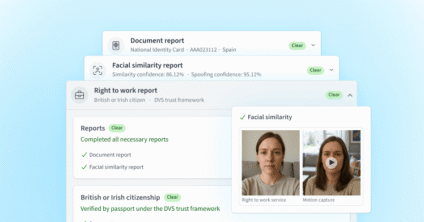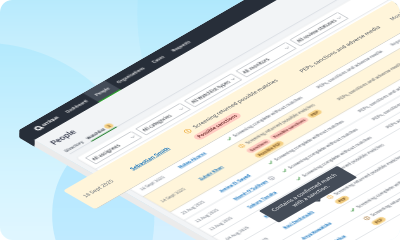
The UK Right to Rent scheme was introduced by the government to ensure that only tenants with a legal right to live in the UK can rent property. All adult tenants must be checked before they move into private rented accommodation. These checks help prevent illegal renting while keeping the process fair and compliant.
Landlords, estate agents, and property managers are responsible for carrying out these checks, and this comes with compliance concerns and challenges to navigate. At Amiqus, we help simplify this process. Our government-approved IDVT software provides a clear, repeatable way to carry out right to rent checks with confidence.
In this blog, we explain the current right to rent scheme, the steps you must follow, and how digital solutions can streamline the process for both you and your tenants.
What is a right to rent check?
Understanding right to rent checks
A right to rent check confirms that a prospective tenant is legally allowed to rent property in the UK. This usually involves checking identity documents and immigration status, and recording the information in line with data protection requirements.
These checks help prevent agents on behalf of landlords from unintentionally renting to someone who does not have permission to live in the UK. They apply to all adult tenants, meaning anyone aged 18 or over who will occupy the property as part of the tenancy agreement.
Checks must be completed before the tenant moves in. Doing this correctly allows the agent to meet their legal obligations and establish a statutory excuse, which offers protection if a tenant is later found not to have the right to rent.
Who needs to perform a right to rent check?
Anyone renting property to private tenants, unless they are exempt, must carry out a right to rent check on every adult occupant before the tenancy begins.
Responsibility sits with the landlord, even if a managing agent is involved. Agents can carry out checks on the landlord’s behalf, but it remains the landlord’s duty to ensure they are completed correctly and that records are kept securely. With the right software, this process can be quick and straightforward, without adding unnecessary admin.
Right to rent check exemptions
Checks aren’t required for tenants under 18, close family members of the landlord, social housing tenants, certain license arrangements, or domestic employees living on the employer’s premises. They also don’t apply outside England, such as in Scotland, Wales, or Northern Ireland. Knowing these exemptions helps you stay compliant while avoiding unnecessary checks.
Understanding your legal requirements for right to rent checks
Home Office rules letting agents must follow
UK immigration law requires agents to carry out right to rent checks to avoid renting to individuals without permission to reside in the UK. Carrying out correct checks helps streamline the process for tenants, and protects letting agents and landlords from legal risks and civil penalties issues for non-compliance.
As checks must be completed for all adult tenants, with strict requirements around timing and record keeping, using an efficient digital solution can make a significant difference.
If you’re an estate agent carrying out a right to rent check in place of the landlord, you must also follow all appropriate Home Office rules to ensure security and compliance.
The importance of maintaining a statutory excuse
A statutory excuse protects agents from penalties if the right to rent process has been followed correctly. It is evidence that the required checks were completed, even if a tenant’s immigration status changes later.
To maintain a statutory excuse, compliance is required at every stage. This includes checking the correct documents, recording the outcome, and storing records securely.
What documents are required for right to rent checks?
Acceptable documents for right to rent
Agents or landlords must verify documents that confirm both identity and the right to rent. Commonly accepted documents include:
- Passports, including UK and recognised overseas passports
- Biometric residence permits (BRP)
- National identity cards, where applicable
- Full birth certificates for certain statuses
If a tenant is not a British or Irish citizen, additional proof of immigration status is required. This may include:
- Visa documentation
- Biometric residence permits (BRP)
- Home Office digital status confirmation
Digital checks can assess this information quickly and securely, giving property managers greater confidence in the accuracy of their checks and records.
Using digital right to rent checks to simplify compliance
Benefits of digital checks for property managers
Compared to manual checks, digital right to rent checks offer several practical advantages. Digital software is built specifically to support compliance, with relevant guidance built in. Automation helps speed up the process and reduce manual effort.
Key benefits include:
- Faster tenant onboarding
- Reduced paperwork and admin
- Greater accuracy and consistency
- Support for remote and flexible lettings
- Enhanced fraud protection
Government-approved IDVT explained
Identification Document Validation Technology, or IDVT, is a government-approved digital method for verifying identity documents. It helps confirm documents are genuine, reduces the risk of fraud, and automates parts of the verification process.
Using government-approved IDVT allows agents to:
- Confirm documents are valid and authentic
- Store audit-ready digital records
- Reduce human error and administrative effort
- Maintain a statutory excuse more reliably
Digital checks make the right to rent process simpler, faster, and more secure. With the right IDVT system in place, much of the administrative burden can be handled for you, while ensuring checks are completed correctly.
Why choose Amiqus for right to rent checks?
A trusted digital compliance partner
Amiqus specialises in UK-focused compliance and digital identity verification. Our government-approved IDV technology is designed specifically for regulated checks, helping property managers carry out right to rent checks with confidence.
Scalable solution for estate agents
Our solution is suitable for letting agents and property managers overseeing large portfolios. Amiqus integrates easily into your existing workflows, but provides a more streamlined and reliable solution to help you save time, stay compliant, and avoid hefty fines.
Make right to rent checks simple and compliant with Amiqus
Right to rent checks are an important step when letting property in the UK. Best practice includes completing checks on time, verifying the correct documents, and storing records securely.
Digital right to rent checks provide a modern and reliable way to meet these requirements, handling tenant information securely while reducing admin and improving consistency.
If you’re an estate agent or property manager looking to improve your right to rent checks, Amiqus’ digital solution can help. To find out more, book an exploratory call today.