Effective remote onboarding is central to how successful organisations hire, verify, and support new staff. As remote and hybrid working become part of everyday business, onboarding needs to do more than cover introductions and admin. It needs to help you build trust early, protect sensitive data, and meet compliance requirements without creating delays for your team or the people you’re bringing on board.
At Amiqus, we help organisations onboard staff remotely with more speed, consistency, and confidence. We know that digital onboarding needs to feel straightforward for candidates and dependable for employers. In this article, we’ll look at the challenges of remote onboarding, the digital tools that make it work, and how to create a process that supports both compliance and a better onboarding experience.
The new challenges of remote onboarding
Remote onboarding gives organisations more flexibility, but it also changes how trust is built. In a face-to-face setting, you can review documents in person, answer questions on the spot, and guide someone through each stage of the process. In a remote setting, those same tasks need to happen digitally, without losing clarity or control.
That’s where many teams run into friction. Manual processes often slow things down. Email chains create confusion, or documents get sent in different formats, stored in different places, and reviewed at different times. It becomes harder to keep a clear record of what’s been checked, what’s still missing, and whether the process meets the right compliance standards.
Remote onboarding can also place more pressure on the person joining your organisation. If instructions aren’t clear, or the process feels fragmented, it’s easy for momentum to drop. A strong first impression matters, especially when a new starter is not meeting your team in person on day one.
The most common challenges tend to include the same themes:
- Verifying identity without in-person checks
- Collecting documents securely
- Keeping track of onboarding progress across teams
- Creating a consistent experience for every new starter
- Meeting compliance requirements without adding admin stress
These challenges are not new, but remote and hybrid working make them more visible. To handle them well, you need a process that is simple to follow, easy to manage, and built for digital-first working from the start.
What effective remote onboarding looks like
Good remote onboarding is not about adding more steps to the process. It’s about making each step clearer, faster, and easier to complete. That starts with removing unnecessary friction and giving both your internal team and your new starters a single, secure route throughout.
A strong remote onboarding process usually includes a few essentials. Identity checks need to happen in a way that is secure, accurate, and easy to complete from anywhere. Document collection needs to be organised and auditable. Communication needs to be clear, so people know what to do and when to do it. Most importantly, the whole process needs to support compliance without turning into a manual burden for your team.
Clear identity verification
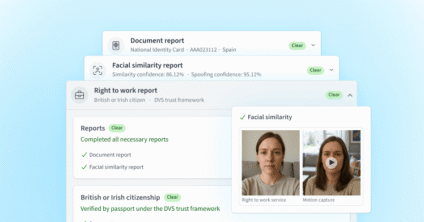
When you onboard remotely, digital identity verification helps you confirm that the person is who they say they are. This is a key part of building trust early, especially when there is no in-person contact. A secure digital process can reduce errors, improve consistency, and help you move faster without cutting corners.
Secure document management
Remote onboarding often involves collecting contracts, proof of identity, right to work documents, and other records. Managing those documents through email or shared folders can create risk. A secure onboarding platform gives you one place to request, review, store, and access information when you need it.
A better experience for new starters
The onboarding process shapes how people see your organisation. If it feels disjointed, slow, or unclear, that impression lasts. If it feels well organised and easy to complete, it builds confidence from the start. In remote settings, that matters even more because the onboarding journey often begins before any in-person interaction happens.
How digital tools help you stay compliant at scale
As hiring volumes grow, manual remote onboarding becomes harder to manage. Different teams may follow different steps. Requests may be duplicated. Important checks may be delayed. That creates extra work, and it can also create compliance gaps.
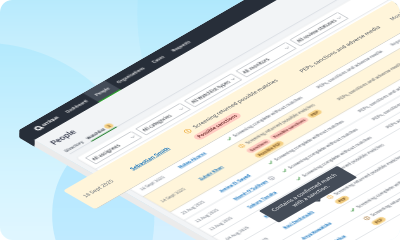
Digital onboarding tools help bring structure to the process. Instead of relying on scattered systems and manual follow-up, you can manage onboarding through one workflow. That makes it easier to standardise checks, maintain records, and keep progress moving.
The benefits are practical and immediate:
- You can collect the right information at the right stage
- You can reduce repetitive admin for hiring and compliance teams
- You can create a more consistent process across remote and hybrid teams
- You can keep sensitive data in a secure, central place
- You can show a clear audit trail when checks have been completed
This matters for more than operational efficiency. It helps you build a process that stands up to scrutiny. When compliance is part of the workflow, rather than added on at the end, it becomes easier to manage with confidence.
Technology also helps remote onboarding feel more joined up. Instead of asking people to switch between emails, attachments, forms, and follow-up calls, you can guide them through one clear process. That reduces drop-off, saves time, and gives your team better visibility from start to finish.
For modern workforces, that level of control matters. Remote and hybrid working are not temporary exceptions, but a key part of how many organisations now operate. Onboarding needs to reflect that reality, with systems that support flexible working without weakening trust, security, or compliance.
Building a remote onboarding process that works
The best remote onboarding processes are designed around both user needs and compliance needs. That means thinking carefully about how people move through the journey, what information you need from them, and how your team reviews and records each step.
A useful starting point is to simplify the process before you digitise it. If a step adds little value, it may not need to be there. If a request is often misunderstood, it may need clearer wording. If a task is repeated across teams, it may need one owner and one workflow.
From there, it helps to focus on the basics:
- Keep instructions clear and easy to follow
- Use secure digital verification and document collection
- Reduce the number of handoffs between teams
- Make progress visible, so nothing gets missed
- Choose tools that support both compliance and user experience
The goal is to make onboarding more dependable. When the process is clear, people complete it more easily, and when checks are standardised, your team works with more confidence.
Remote onboarding solutions for modern workforces from Amiqus
Remote onboarding works best when it gives you confidence at every stage. That means knowing who you are onboarding, collecting the right information securely, and giving new starters a clear path through the process. For remote and hybrid teams, digital onboarding is no longer a nice-to-have. It is a practical way to reduce admin, strengthen compliance, and create a better experience from the start.
At Amiqus, we help organisations bring all of that into one place with remote onboarding software designed for secure identity checks, digital document management, and smoother compliance workflows. If you want to make remote onboarding faster, simpler, and easier to manage at scale, we’re here to help you build a process that works – get in touch today.